Far from being reserved strictly for serious tragic soliloquies, William Shakespeare was a master of wordplay, quick banter, and bawdy quips. From royal courtyards to rowdy Elizabethan tavern scenes, comedic wit flowed effortlessly from his quill.
Whether you are memorizing lines for drama rehearsal, teaching high school English, or chuckling over theatrical tropes, these Bard-inspired puns offer timeless literary humor.
Best Shakespearean Puns and Jokes A Bard-tastic Guide to Wordplay
Elizabethan England celebrated sharp double entendres and quick wit, proving the Bard of Avon knew how to keep audiences laughing in the aisles.
- Why did Hamlet struggle on his midterm exam? He kept debating to be or not to be right about the answers!
- Romeo and Juliet were awful communicators because their romantic messages were hopelessly star-crossed.
- What did the Renaissance baker say to Shakespeare? Your sourdough sonnet is rising to greatness!
- I attempted to pen an Elizabethan sonnet about my kitten, but the rhyming meter ended in pure purr-plexity.
- Macbeth entered the local tavern and the keeper said, Is this a foaming pint which I see before me?
- Trying to decipher an unedited Elizabethan folio is like untangling a web of theatrical intrigue.
- Why was Shakespeare such an accomplished landscaper? Because his garden beds had intricate plots and dramatic hedges.
- I asked my colleague to rehearse a stage soliloquy, but he offered a lengthy speech of excuses.
- What do you call an avian staging of a Shakespeare comedy? Much Ado About Nesting!
- My literature teacher asked for a Shakespearean punchline, and I replied that brevity is the soul of wit.
- Staging our amateur high school play was an absolute comedy of errors when the stage curtain fell early.
- What is an Elizabethan apparition's favorite subject? Spectral Boolean algebra!
- Lady Macbeth tried scrubbing ink off her fingers while reciting, Out, stubborn fountain pen spot!
- The archivist examined the dusty First Folio and declared it Much Ado About Cataloging.
- Why did the Elizabethan actor leave the playwright? Because they were no longer on the same manuscript page!
Shakespearean Puns: A Deep Dive into Wordplay
From royal soliloquies to comedic sidekick banter, Shakespearean wordplay turned everyday English into poetry and punchlines. Learn about the life and literary output of playwright William Shakespeare across the Tudor and Jacobean eras.
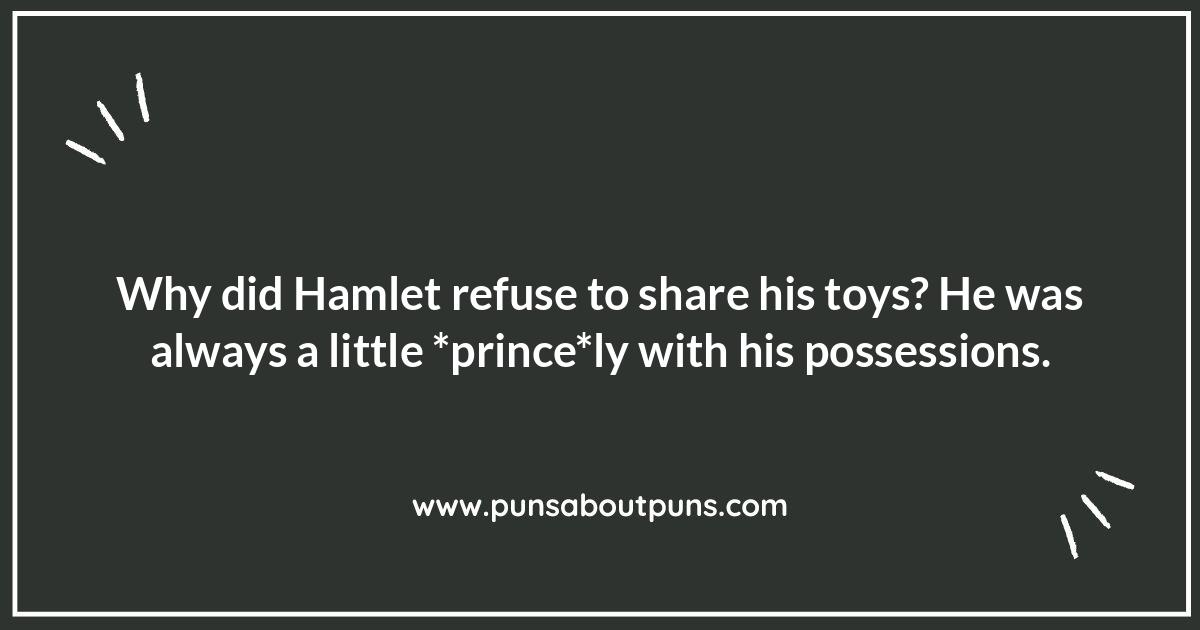
- Why was Prince Hamlet stingy with his royal crown? He was far too princely with family heirlooms.
- Writing a sonnet with a broken quill is pointless because the ink never leads anywhere fruitful.
- What is an Elizabethan stage manager's favorite lunch order? A hearty ham-let sandwich on rye.
- When the forest fairies lost their stage props in the wings, the production suffered genuine stage fright.
- I asked the theatre professor for his favorite play, and he dramatically proclaimed All is Well That Ends Well.
- Why did King Lear struggle with his mobile phone? He could never maintain a proper connection with his daughters.
- What do you call an Athenian forest comedy starring clumsy bears? A Midsummer Night's Trample!
- A playwright wrote a tragedy about a butcher, filling every scene with meaty metaphors and sliced dialogue.
- Romeo's love letters received poor marks in English composition because his imagery was far too cheesy.
- Telling jokes about the famous balcony scene usually flies straight over the audience's head.
- Macbeth told his party caterers to ensure double double toil and trouble made the feast royal and grand.
- A playwright attempted a drama about a lazy gardener, but critics complained of massive plot holes.
- Why do Shakespearean characters face constant dilemmas? Because they suffer from dramatic personality crises.
- Staging a romance in Verona turned chaotic when the actors mixed up their opening monologues.
- What do you call a kitchen comedy about burnt pastries? Much Ado About Muffins!
The Art of Shakespearean Jokes: Beyond the Obvious
Beneath high drama and royal intrigue lie layered puns that subvert expectations and reveal human nature with razor-sharp comedic timing. For more literary wordplay, explore our witty collection of satirical puns and jokes about books for avid readers.
- I drafted a Shakespearean monologue about a shoemaker, filling the lines with deep sole-searching wisdom.
- A restaurateur opened a Hamlet-themed bistro, but customers complained the kitchen was to be or not to be on time.
- Reading Elizabethan insults is an absolute masterclass in sharp theatrical slapstick.
- What do you call a play about clumsy pastry chefs? A Midsummer Night's Sourdough!
- Writing verse about an antique grandfather clock was a complete waste of ticking time.
- My attempt at iambic pentameter freestyle collapsed when I lost the rhythm and poetic reason.
- Why did the stage actor refuse to perform in the rain? He feared getting soaked in melodramatic dampness.
- A drama about an Elizabethan tooth extractor turned out to be an excruciating ache for audiences.
- What kind of tunes does the ghost of Elsinore enjoy? Spook-tacular Renaissance lute ballads!
- A play about a London tailor was such a hit that the audience had fits of hearty laughter.
- A staging about a nocturnal botanist was described by critics as a night-blooming marvel.
- A swashbuckler drama about Elizabethan corsairs was packed with piratical arguments and treasure banter.
- Why was the drama set in the Bodleian Library so quiet? Every scene was delivered in hushed stage whispers.
- A tragedy centered on a cheese artisan curdled under poor stage lighting and cheesy costumes.
- The theatrical portrait of a Renaissance painter was hailed as a bold stroke of creative genius.
Exploring the Context of Shakespearean Puns: Time and Place
Elizabethan theatregoers stood in open-air playhouses where actors delivered rapid-fire puns directly to groundlings in the pit. Discover the theatrical history and architecture of the original Globe Theatre in London where these masterworks premiered.
- A script about a Tudor baker fell flat because the central yeast metaphor was only half-baked.
- Whenever I try writing a grave Elizabethan tragedy, the scenes turn into a ridiculous farce.
- Why did the wandering actor get turned around in the Forest of Arden? He could not see the timber for the trees.
- I am outlining a play about an Elizabethan apiarist filled with honeyed metaphors and stinging retorts.
- A historical comedy about royal doublet seamstresses was seamlessly stitched from beginning to end.
- Composing a sonnet about an hourglass proved impossible when sand ran out before the closing couplet.
- A drama featuring a dentist in Stratford-upon-Avon proved to be a cavernous void of dental errors.
- What do you call an Elizabethan comedy about humid weather? A Midsummer Night's Frizz!
- A production depicting a lethargic monarch was denounced by critics as royally tedious.
- A play about a bumbling stage conjurer failed when the magician vanished before his final soliloquy.
- Why was the theatrical saga of an orchard grower so dramatic? Because the branches had endless plot twists.
- Staging an opera about an Elizabethan lutist hit a sour note when the strings snapped in Act Two.
- What is an Elizabethan lover's favorite parlor pastime? Cross-worded banter in the courtyard garden.
- An avant-garde play featuring a silent Tudor court jester left theatergoers completely speechless.
- A gourmet feast drama set in Hampton Court was brimming with well-seasoned dialogue and savory puns.
Shakespearean Jokes and Social Commentary: A Clever Disguise
Court jesters and sharp-tongued heroines used clever banter to comment on authority, romance, and class distinctions with witty diplomacy.
- A comedy mocking royal censors was kept so quiet that the entire manuscript was permanently shelved.
- What do you call an Elizabethan play about an exhausted royal guard? A Midsummer Night's Snooze!
- A production about a bread baker showed that royal taxation created a desperate knead for change.
- A farce about an absentminded duke was described in chronicles as a regal catastrophe of errors.
- Why did Romeo hesitate before climbing the stone wall? He worried he was getting balcony-ed into danger.
- A drama ridiculing portrait painters was dismissed because the artist kept brushing off royal patrons.
- An Elizabethan play about a town judge was packed with truthful testimony and sharp cross-examinations.
- What beverage does an Elizabethan ghost order at the tavern? A foaming spirit-zer with fresh mint!
- Why was the ballad about a worn leather boot so melancholy? It was overflowing with soulful sorrow.
- A play about clumsy banquet servers was filled with spilled gravies and chaotic royal thrills.
- A satirical pastoral play about theatrical shepherds was deemed a truly baa-d waste of pasture time.
- A comedy about a bewildered cartographer navigated numerous plot turns before reaching the final act.
- What do you call an Elizabethan comedy about sea spray? Much Ado About Misting along the Thames!
- A comedy about an indecisive miller was a question of to knead or not to knead the daily rye.
- Why did the drama critic pan the acting troupe? Their execution was a genuine tragedy of comic timing.
Decoding Shakespearean Wordplay: Double Meanings and Innuendo
Fools and monarchs alike relied on homophones and hidden meanings, turning straightforward lines into clever comedy for attentive listeners. Uncover the dramatic themes and famous soliloquies in the tragedy of Hamlet Prince of Denmark on stage.
- A drama about a careless Renaissance barber was hailed as a truly hair-raising theatrical experience.
- Writing a play about a Tudor librarian proved tricky because the manuscript kept getting archived.
- What do you call a stage drama about an uncoordinated fresco artist? A messy brush with catastrophe!
- A script centered on a frantic court chef proved to be an endless sauce of theatrical frustration.
- A production featuring a clumsy acrobat turned out to be a perilous balancing act of staging.
- A satirical play mocking tax collectors was filled with audits, deductions, and royal assessments.
- A comedic scene featuring an apprentice cobbler was an intricate cobble of confusing nonsense.
- Why did the veteran Globe player decline the pirate role? He refused to be type-cast on the high seas!
- What carriage does an Elizabethan spirit drive to the ball? A ghostly phantom-wagon drawn by misty horses!
- A play depicting an idle Tudor apiarist buzzed with dull dialogue that felt like a monotone drone.
- A production about a moody royal astrologer erupted into tempest-uous arguments over zodiac charts.
- A scene featuring a tavern jokester relied on wordplay that was wonderfully corny and quick.
- A drama about an anxious watchmaker proved to be a ticking bomb of nervous Elizabethan pacing.
- A comedy about a painter mixing tempera pigments struggled to achieve the right theatrical hue-mor.
- What do you call a satirical sketch about a broken market cart? Much Ado About Vending along Cheapside!
Shakespearean Puns in Performance: Bringing the Jokes to Life
Modern actors bring Elizabethan dialogue to vibrant life using physical timing, playful intonation, and knowing glances to land every pun. Pair your love of the stage with our lively funny theater puns for actors and drama students.
- A performance depicting an ironmonger's shop was filled with hammering errors and clanging swords.
- What do you call a nocturnal staging about woodland birds? A Midsummer Night's Hoot under the stars!
- Rehearsing Elizabethan insults turns rehearsals into an energetic verbal volley of witty retorts.
- An energetic scene starring an agile dancing cobbler featured graceful sole-ful footwork.
- Why was the clockmaker's drama so suspenseful? The dramatic tension was constantly winding upward.
- Playing Mercutio requires sharp rapier reflexes and comedic timing that parries every insult.
- Staging a high-wire scene above the open Globe pit was an intensely high-stakes theatrical gamble.
- What kind of spectral transport haunts royal battlefields? An ethereal phantom chariot drifting in fog!
- A comedy depicting an indecisive court tailor turned into a tangled stitch-uation of hem lengths.
- A historical play about a royal botanist delighted audiences with clever floral pantomime.
- A mystery about a royal bookkeeper kept getting misfiled under bureaucratic chaos.
- Why did the lead tragedian capture everyone's attention? His commanding stage presence held the house rapt.
- A kitchen farce featuring an opinionated cook delivered saucy monologues that spiced up the second act.
- A poetic play about an Elizabethan beekeeper was a sweet honeycomb of rhyming couplets.
- What do you call a play about an exhausted blacksmith? Much Ado About Snoozing near the forge!
Modern Interpretations of Shakespearean Jokes: Still Funny Today?
Centuries later, classic comedies and tragicomedies still inspire modern memes, witty adaptations, and classroom chuckles. Add lyrical laughs to your repertoire with our collection of funny poetry puns for sonnet enthusiasts.
- Adapting King Lear for modern television turned stormy heath scenes into chaotic weather broadcasts.
- A modern culinary take on Twelfth Night turned the Duke's feast into a complete dough-saster.
- Shakespearean memes circulating online show that witty wordplay remains sharper than a serpent's tooth.
- What do you call a modern gallery adaptation of Hamlet? To Hue or Not to Hue across canvas!
- A contemporary staging about a confused botanist featured overgrown plot holes and tangled ivy.
- English professors enjoy analyzing Shakespearean quips because every pun contains layers of subtext.
- A high school drama adaptation of The Comedy of Errors had students groaning at ancient dental gags.
- A modern pantomime adaptation of The Tempest left Prospero's magical spells completely unspoken.
- Audiences still burst into laughter when Benedick and Beatrice exchange fiery insults in modern dress.
- A dramatic performance of Romeo and Juliet in a college library filled the aisles with bookish drama.
- Telling jokes about the ghost of Hamlet's father always raises spirited laughter among English majors.
- A modern adaptation set in a bustling coffeehouse brewed up dramatic romance over espresso shots.
- What do you call an Elizabethan comedy about an uncoordinated cavalry officer? A Midsummer Night's Trip!
- The enduring appeal of the Bard's comedies proves that human follies remain unchanged over four centuries.
- A student tried drafting an Elizabethan sonnet on a tablet, finding the autocorrect lacked poetic soul.
Shakespearean Puns and Their Impact on Language: A Lasting Legacy
By inventing hundreds of words and phrases still spoken daily, Shakespeare ensured his comedic wit remains woven permanently into the English language.
- Every time someone says all that glitters is not gold, they echo Elizabethan poetic wisdom.
- Phrases like breaking the ice began as clever stage banter designed to warm up cold dialogue.
- A comedy about an indecisive architect showcased structural plot holes and missing foundations.
- Why did the veteran player enjoy Shakespearean tragedies? The dramatic depth kept him completely engaged.
- When actors perform Twelfth Night, they remind us that some are born great while others achieve punny wit.
- What do you call a botanical comedy set in an enchanted forest? Much Ado About Toadstools!
- The English lexicon owes terms like swagger, bedazzled, and elbowroom to Shakespeare's creative vocabulary.
- A slow-paced drama about a garden snail surprised critics with a shell-shocking plot twist.
- An Elizabethan medical satire was described by reviewers as a sharp cut-up of clinical absurdities.
- Why did the aspiring poet carry a stepladder to Stratford? To reach higher summits of Elizabethan meter!
- Phrases like wild-goose chase and in a pickle started as theatrical quips before entering daily speech.
- A play about a narcissistic nobleman collapsed because the lead actor was far too self-absorbed.
- What do you call an Elizabethan comedy about boiling water in the royal scullery? Much Ado About Steaming!
- Language scholars celebrate the Bard because his verbal acrobatics shaped the foundation of modern idioms.
- Reading Shakespearean comedy reminds us that a timely joke, well phrased, outlives empires and ages.